Springs · Barrillia Park
Garage Door Track Repair or Replacement in Barrillia Park
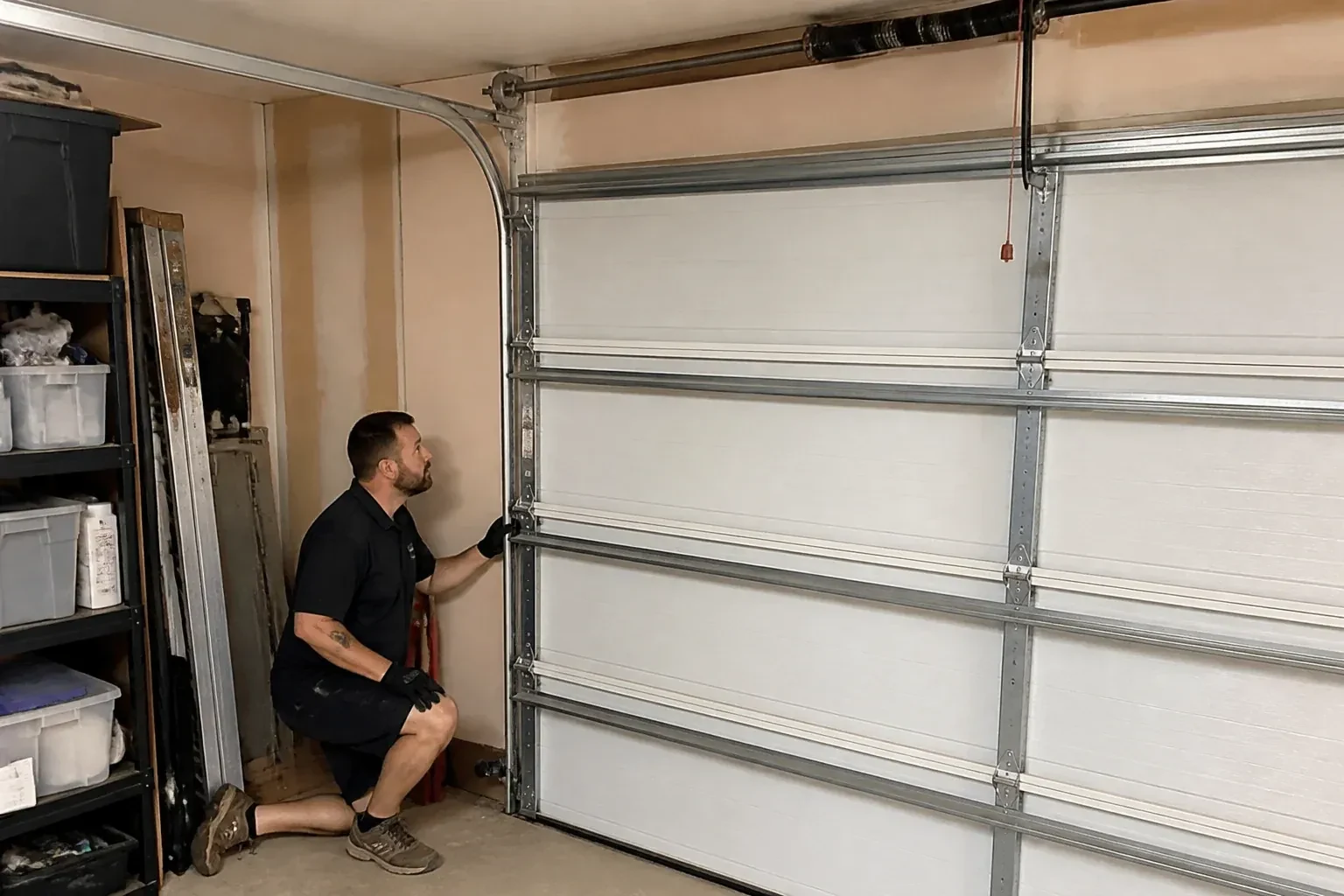
You bought the house with a door that sticks near the top of its travel. The vertical track was screwed tight against the jamb, so the door drags along its stop moulding on every trip instead of swinging clear.
Garage Door Track Repair or Replacement
In plain words
Track has to be in the right place, not merely straight. Each vertical run is set plumb with a slight taper away from the jamb at the top, so the door presses against its stop when closed and swings clear as it opens. The gap between track and door edge is equal on both sides. The horizontal runs are level with each other, square to the vertical runs and matched in radius so the door turns the curve without twisting. Track repair measures all of this and resets whatever has drifted, because a door is only as smooth as the path it is given.
How the visit goesYou bought the house with a door that sticks near the top of its travel. The vertical track was screwed tight against the jamb, so the door drags along its stop moulding on every trip instead of swinging clear.
Barrillia Park
How the visit goes
Rollers, hinges and top fixtures along the path
With the door held, the technician works along both sides checking how each roller sits. A roller should rest in the channel without being pinched, and its stem should turn and slide in the hinge or bracket that carries it. A stem that is stuck, a wheel riding up on the lip, or a roller that has popped free are signs of a spread or misaligned section nearby. Worn wheels are also a cause rather than just a casualty, since a roller that no longer rolls drags on the track edge and slowly opens it. The top fixtures are checked for bending, and hinges for splits, so the parts that guided the door into trouble are corrected with the track.
Tension back, balance and opener tests
Once the track is fixed and every roller is seated, the springs are wound back to the turns the door calls for and the clamps come off. The technician lifts the door by hand through its full travel, watching each roller through the curve and along the horizontal run for any catch, and checks that the door holds itself at roughly waist height. It is run up and down several times by hand before the opener is reconnected, and the opener's travel limits and force settings are then adjusted to the newly aligned door, with the reversing test done against a block on the floor. You watch the finished door make the trip before the tools are packed.
Parking and storage habits around the track
Most creased tracks are met by a bumper or a mirror, and most bent horizontal runs by a ladder, a bike or a shelf. It is worth walking the garage after the repair and noticing what sits close to the track: move the recycling bins and the hockey bags a hand's width further in, hang nothing from the back hangs, and leave the horizontal runs clear of stacked boxes. Inside the car, a strip of tape on the floor or a tennis ball on a string marks where to stop. None of this is a chore, and it addresses the single most common reason a straightened track needs straightening again.
Garage Door Track Repair or Replacement
In the van
- Lag screws and track bolts
- Top fixtures
- Track pliers and dead-blow hammer
- Level, plumb line and square
- Perforated angle back hangs
What affects the quote
Same fees day, night or weekend
1Rollers, hinges and top fixtures damaged alongside
Parts that suffered while the door was catching, such as flat-spotted rollers, split hinges or bent top fixtures, are offered as their own items so the new track is not chewed by the old damage.
2Snow or ice around the track needing clearing first
A track buried under snow or glazed with ice has to be cleared before the technician can see what is actually bent or worn underneath. That extra step is common in winter and is worked into the visit rather than treated as a separate call.
3Access and storage around the track
Shelving, a workbench or a ceiling full of stored goods around the horizontal run slows the work. Clearing the area beforehand changes the time quoted.
Garage Door Track Repair or Replacement: questions
What is the flag bracket and why does it matter?
The flag bracket is the L-shaped angle at the top of each vertical track. It ties the vertical run, the curve and the horizontal track together, and on a torsion-spring door it also carries the end bearing plate for the spring shaft. Because so much meets there, a loose or bent flag bracket throws the whole path off. The technician unloads the springs before moving it and squares it carefully when it goes back.
How often should the track and its fasteners be checked?
A glance each month from inside the garage, with the door closed, is enough to catch a bracket standing off the jamb or a hanger starting to lean. Twice a year, snug the bracket bolts and lag screws, wipe out the channel, and watch the door make a full trip to confirm every roller stays in the track. The industry guidance also suggests an annual visit by a trained door technician, who checks the track with the rest of the system.
Will track work involve the springs?
Sometimes. The flag bracket at the top of the vertical track usually carries the bearing for the torsion shaft, so if that bracket or the curve has to move, the springs are unloaded first with winding bars and rewound afterwards to the same turns. Simple work on the vertical run below the curve, or on the horizontal hangers, can often be done with the springs left alone. Either way the door is balance-tested at the end.
Springs & Hardware
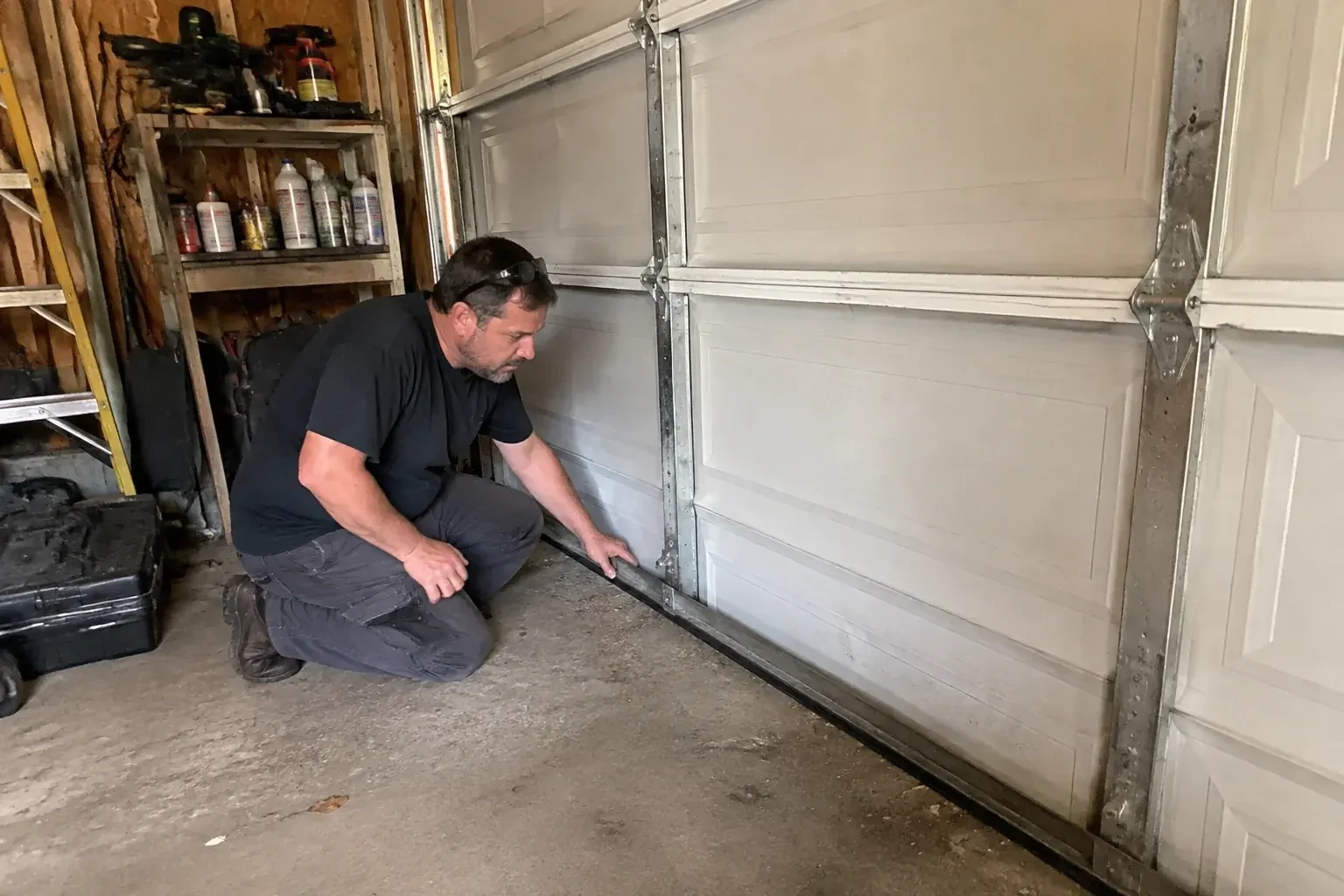
- Garage Door Hinge ReplacementWatching from inside as the door opens, you can see the gap between the second and third panels…
- Garage Door Cable ReplacementYour older door has springs along the tracks, and one cable has slipped off its pulley and dangles…
- Torsion Spring ReplacementNothing broke outright, but the door has grown heavier each winter, opens more slowly and squeals…
Garage Door Track Repair or Replacement near you
If your door in Barrillia Park is doing something new, there is a service here for it. Grinding usually points to rollers or hinges. A door that will not lift points to a spring or cable. A door that reverses on its own points to sensors or force settings. We diagnose first, then repair.