New Doors · Oro-Medonte
Commercial Sectional Door Repair
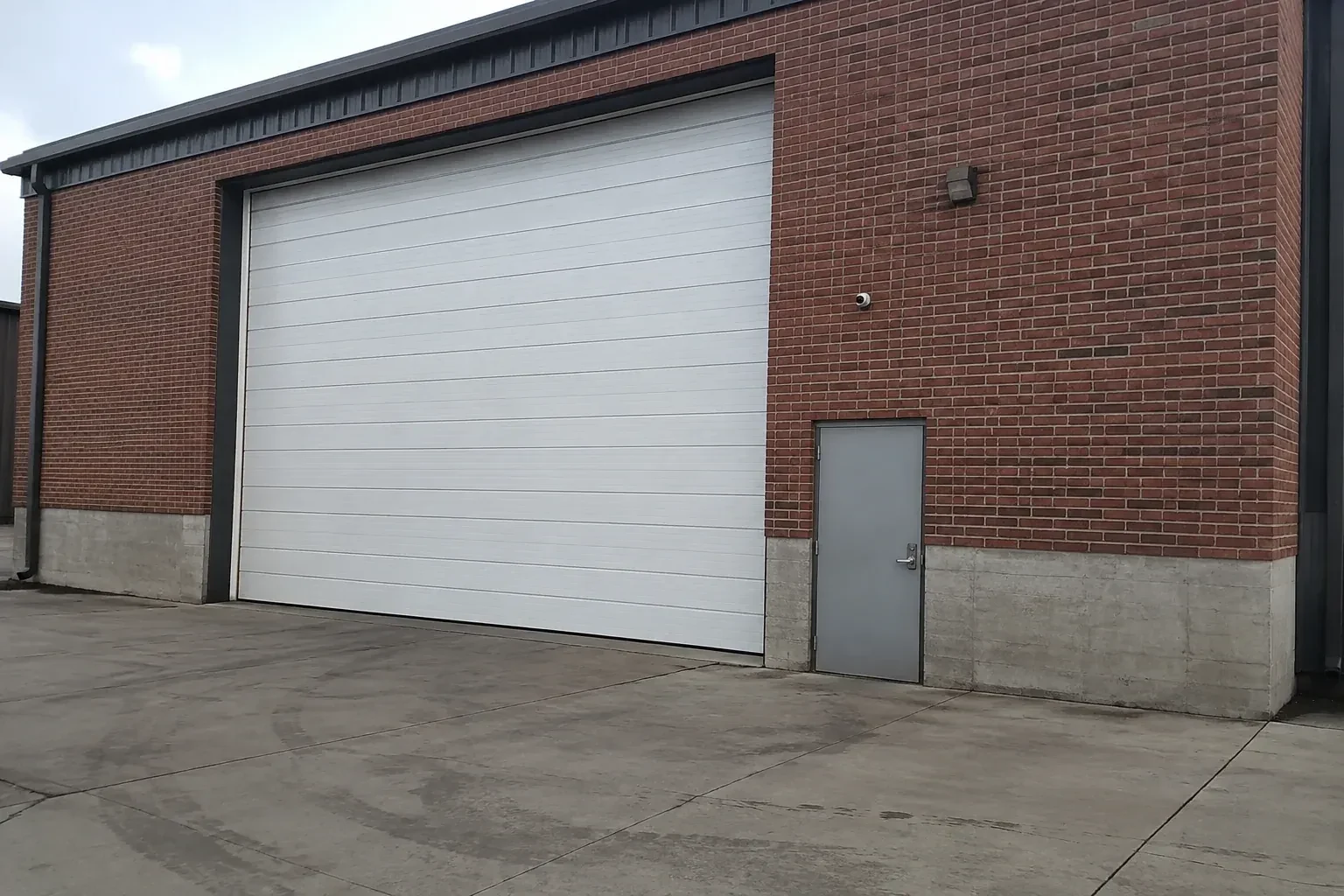
The loading-bay door rises with one side several centimetres lower than the other. A lift cable looks slack, the bottom section sits crooked, and staff have stopped using the opening until the door can travel level again.
Commercial Sectional Door Repair
In plain words
Unusual sound is useful diagnostic information on a commercial sectional door. A knock at the track curve suggests different issues from a steady bearing growl, a scraping section or operator-chain chatter. The technician listens during a controlled cycle, then inspects the hardware at the point where the sound appears. Worn rollers, loose hinges, dry bearings, displaced track and drive components can each be dealt with directly. The completed repair finishes with lubrication where specified and repeated observation of the previously noisy part of travel.
How the visit goesEach opening cycle brings a metallic knock followed by a shudder through the horizontal track. The sound grows near the curve, where a worn roller and loose hinge allow the section to shift under load.
Oro-Medonte
How the visit goes
Starting with the impact point
After a vehicle or load contacts the door, the first inspection follows the force beyond the visible crease. The technician checks the panel skin, insulation, end stiles, reinforcement struts and hinge mounting areas, then looks at the nearest rollers and vertical track. Jamb brackets and anchors are examined for movement that could alter the entire travel path. Door position matters too: damage near the bottom fixture receives special handling because the lift cable connects there under tension. This mapped assessment distinguishes a replaceable section from a wider structural and hardware repair.
Rebuilding the travel path
Bent or shifted track is corrected from the opening upward. Vertical guides are set plumb and at the proper spacing, curved sections are aligned for a smooth transition, and horizontal runs are supported to prevent sag or sideways movement. Loose jamb brackets, splice points, back hangs and sway braces are tightened or replaced according to the surrounding structure. Rollers and hinges are renewed where wear has added play. The technician moves the door gradually while observing clearance at every section, making small geometry adjustments before completing a powered cycle.
Level movement through the opening
After cable, spring or track work, the door should rise with its bottom edge level and move without a side lag. Facility staff can watch the first few routine cycles from a clear position and note whether both cables remain neatly seated on their drums. A new tilt, rubbing sound or loose strand is useful information to report before the opening sees heavier traffic. Keeping pallets and vehicles outside the marked travel zone also protects the restored alignment and gives operators a clear view of the complete door path.
Commercial Sectional Door Repair
In the van
- Torsion springs
- Commercial rollers
- Track brackets and back hangs
- Lift cables and drums
- Shafts and bearings
What affects the quote
Same fees day, night or weekend
1Operator repair requirements
Drive chains, sprockets, shaft couplings, hoists, brakes, clutches, limits and control wiring each add distinct mechanical or electrical tasks to the quote.
2Extent of impact transfer
A dent confined to one section differs from force that also bent an end stile, roller, guide rail, jamb bracket or supporting anchor.
3Parts identification and compatibility
Clear model data and current component markings simplify matching; altered assemblies or unavailable profiles may require additional measurement and an engineered compatible approach.
Commercial Sectional Door Repair: questions
Does a torn bottom seal always mean a seal-only repair?
Not always. The rubber may simply be worn, but a bent retainer, uneven floor, crooked door or impact-damaged bottom section can produce the same gap. The technician checks how the door lands before replacing material. Correcting level or retainer shape first allows the new seal to contact evenly without being stretched to compensate for another fault.
What should be recorded after the work is finished?
Keep the door asset number, date, reported symptom, diagnosed cause, parts installed, adjustments made and functions tested. Spring, cable, panel and operator identifiers are especially useful for later service. Notes about impact location, corrosion or unusual cycle demand add context. A precise record helps facility staff compare future changes and prepare relevant information for the next visit.
What if the door is stuck partly open?
The opening is kept clear and the door is stabilized in its current position before diagnosis. A cable may be displaced, a roller may have left the track, a spring may have failed or the operator may be holding the load. Support and controlled energy handling come before any attempt to move or dismantle the affected assembly.
Installation & Upgrades
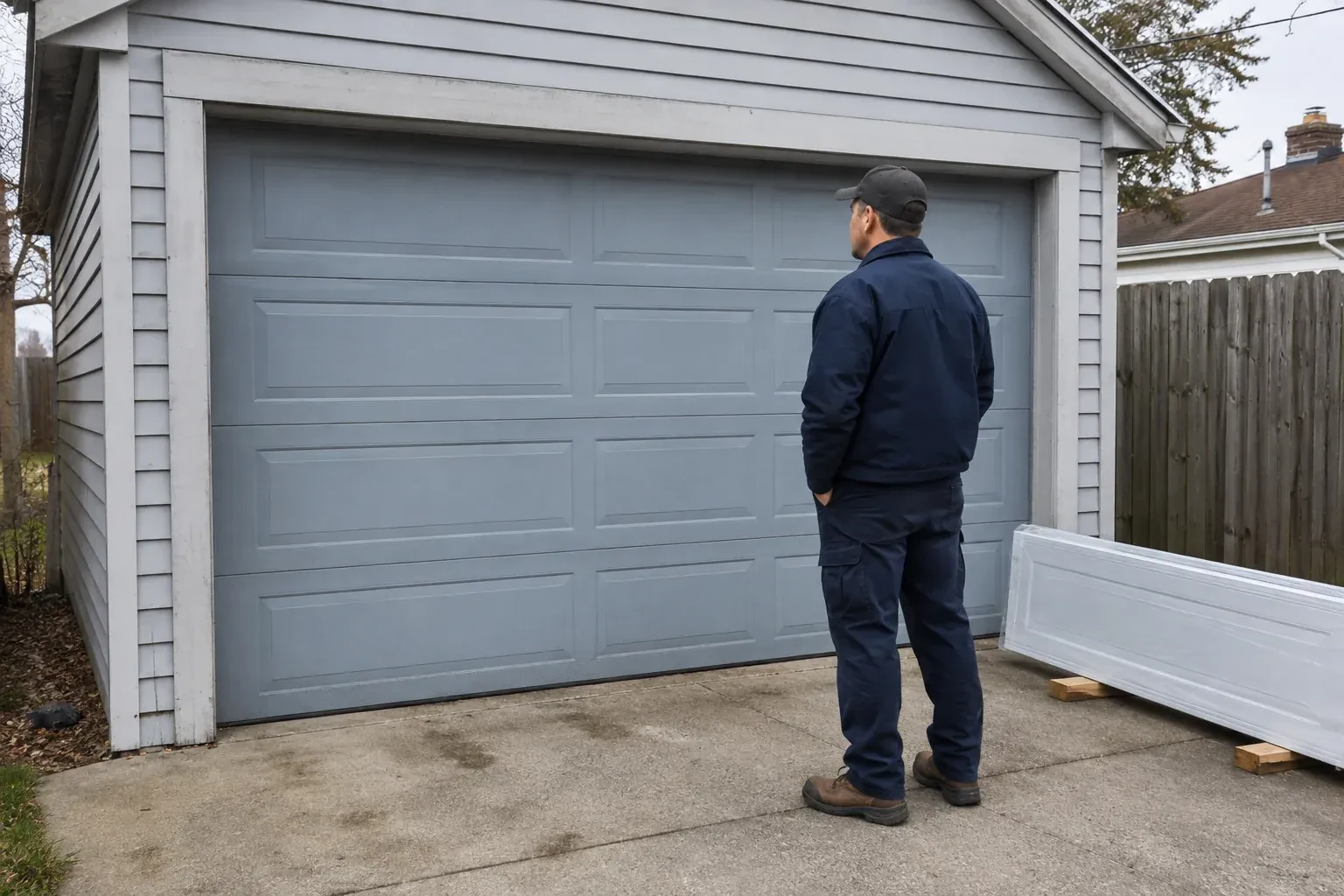
- Insulated Steel Garage Door InstallationThe room above your attached garage stays chilly while the steel door below feels cold to the touch.
- Wind-Rated Garage Door ReplacementYour renovation drawings call for a garage door with a stated design pressure, yet the existing…
- Carriage-House Garage Door InstallationYou appreciate the grain and depth of traditional wood doors, though regular refinishing is not…
Commercial Sectional Door Repair near you
Our garage door services for Oro-Medonte are written up one by one so you can read exactly what happens during the visit. Spring and cable replacement, off-track repair, opener diagnosis, remote programming, weatherstripping, tune-ups, panel replacement and full door installation are all described in plain words.