Repairs · Oro-Medonte
Garage Door Bottom Seal Replacement
Every mild afternoon the snow melts off the car, runs to the door, and by morning the rubber strip along the bottom is frozen to the concrete. Last week the opener lifted the door and left half the seal on the floor.
Garage Door Bottom Seal Replacement
In plain words
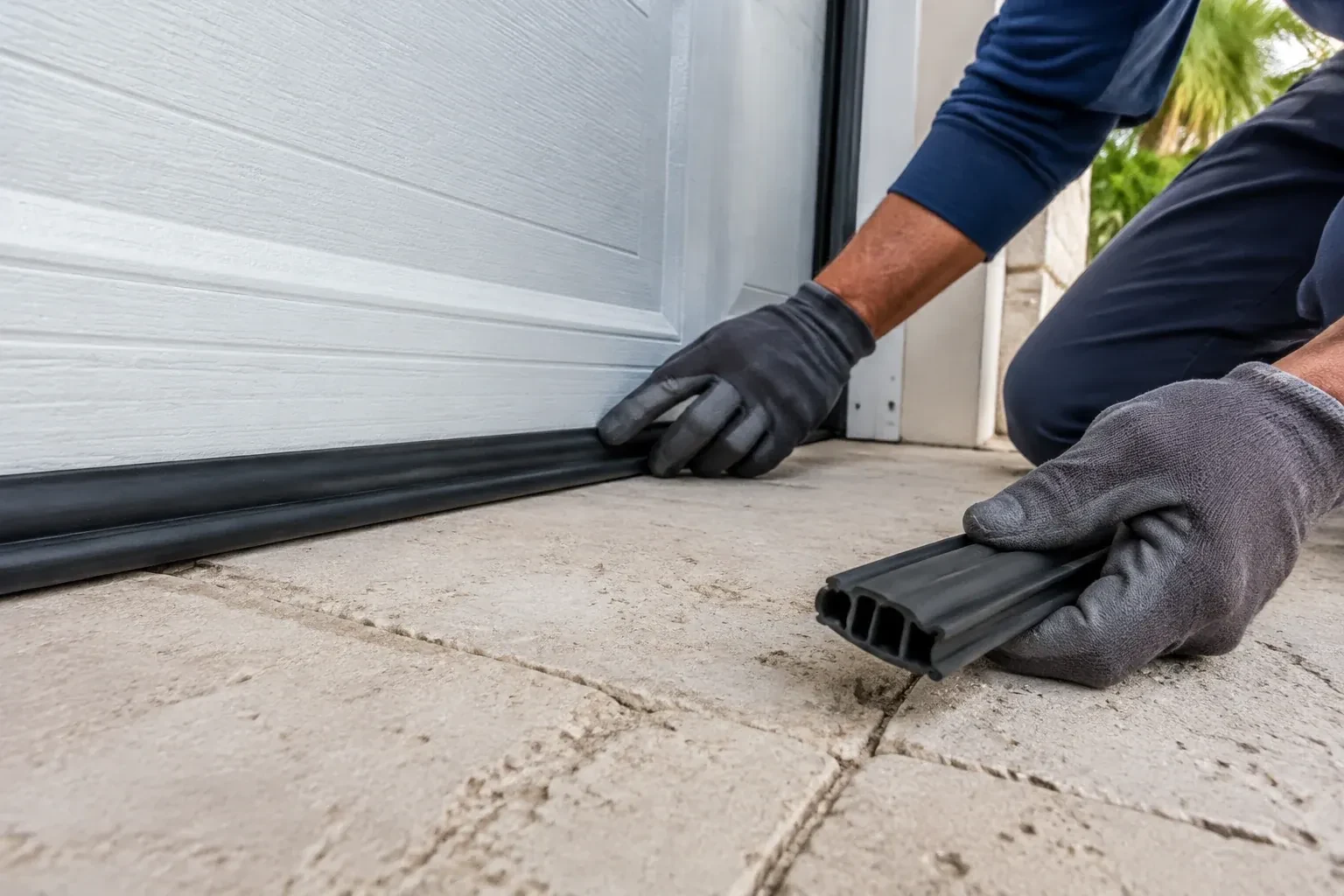
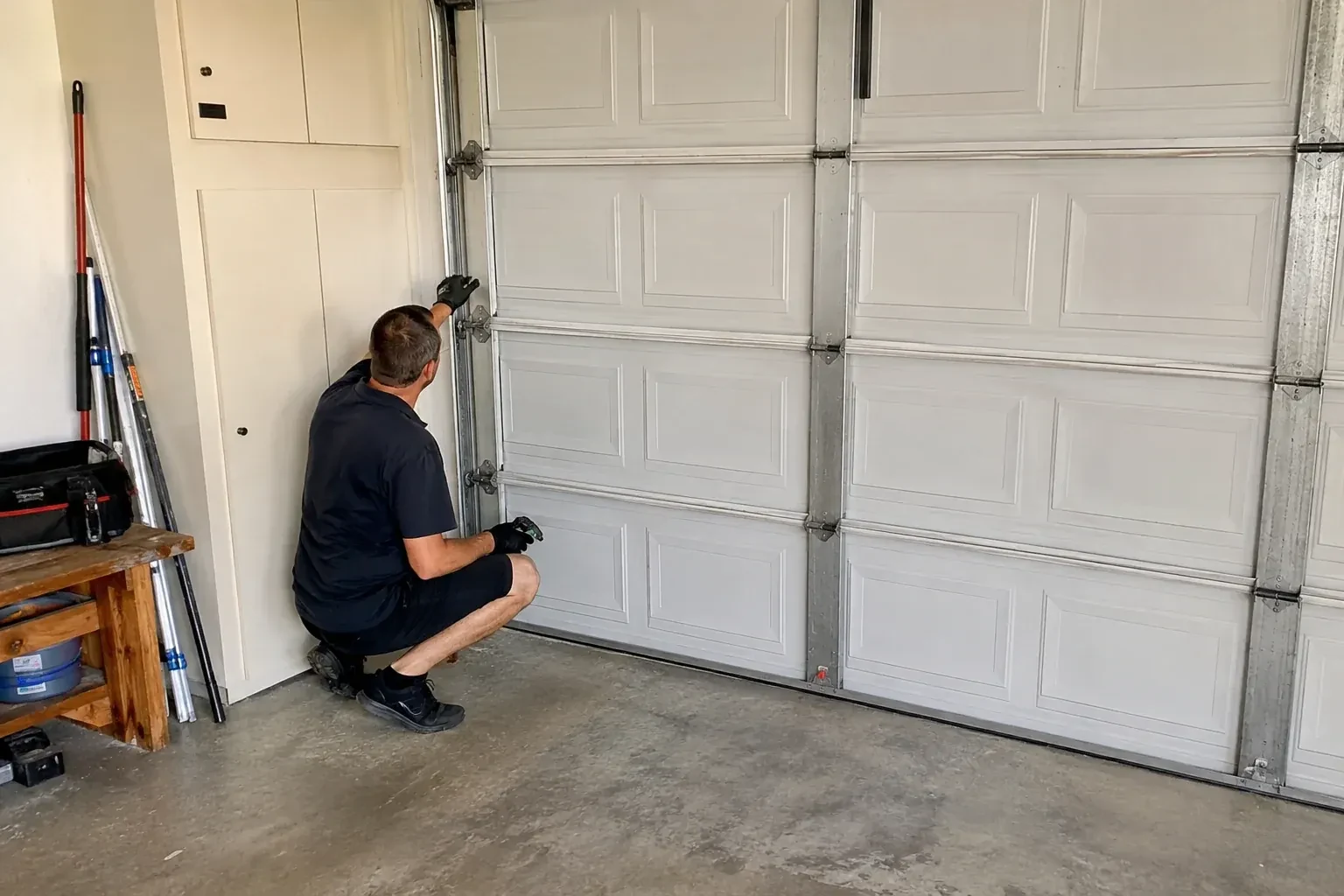
A seal visit runs in a set order. With the door closed, the technician looks for daylight along the floor line and notes whether the gap is even or concentrated at one point. The door is checked for level and the bottom section for straightness, then the retainer is identified and measured. The opener is disconnected and the door secured before the old strip comes out and the channels are cleaned. A new seal, cut a little long, is fed into the channels and trimmed. Finally the door is closed onto the new seal, the opener's limits are reset, and the reversing test is run before the tools go away.
How the visit goesAfter a spring rain there is a puddle inside the door that reaches the tires. The driveway slopes toward the garage, the slab has a low corner, and the flattened old seal is not making up the difference.
Oro-Medonte
How the visit goes
Reading the gap with the door closed
The assessment starts with the lights off and the door down. From inside, the technician looks along the floor line for daylight and notes where it shows: a thin line the full width, a wedge at one corner, or a patch in the middle. A straightedge laid across the threshold shows whether the slab is flat or dished, and a hand run along the seal feels where it touches and where it hovers. Photographs of the worst spots are taken so you can see what is being fixed. This map of the gap tells the technician how tall the new seal needs to be and whether anything other than the seal is contributing.
Securing the door before work begins
The opener's release cord is pulled so the motor is out of the picture, and the door is raised by hand to a height where the bottom rail sits at a comfortable working level, usually around chest height. A clamp goes on each vertical track just below a roller so the door cannot drift down while the retainer is exposed. The bottom brackets in each corner stay untouched throughout, because they carry cable tension whenever the springs are wound. With the door held and the floor in front clear, the seal and retainer can be handled like any other piece of hardware.
What to look for each season
Once a season, close the door, turn off the lights and look along the floor. You are checking for a line of daylight, a corner where the seal hovers, an end that has slipped from its channel, and cracks along the fold of the bulb. Run a hand along the strip for stiff or brittle patches. Then watch the door close under power once and notice how it lands. A change in any of these is worth a call while the fix is a seal or an adjustment rather than a torn strip dragged through a winter. The check takes less time than reading this paragraph.
Garage Door Bottom Seal Replacement
In the van
- T-style bottom seal
- Aluminum bottom seal retainer
- Wire brush and scraper
- Self-drilling retainer screws
- Bead-style bottom seal
What affects the quote
Same fees day, night or weekend
1Door out of level
If one corner of the door hangs low because of cable or spring tension, levelling the door is separate work done before the seal goes in and is priced on its own.
2Number of doors
Two single doors are two seals, two inspections and two opener resets. The travel is shared, so doing both in one visit costs less than two separate calls.
3Threshold seal added
Where a floor threshold is recommended, its length, its type, whether rubber or aluminum-backed, the adhesive and the floor preparation before it is laid appear as a line of their own.
Garage Door Bottom Seal Replacement: questions
Does the opener need adjusting after the seal is changed?
Usually, yes. A new seal is taller than the flattened one it replaces, so the door reaches the floor sooner. Left alone, the opener either presses too hard and bows the bottom section or senses the resistance and reverses. The technician resets the down limit so the seal compresses gently, checks the force, and runs the reversing test with a 38 mm (1.5 in) solid object or a 2x4 laid flat under the door so the safety features still behave as they should.
Will I need a new retainer as well as a seal?
Only if the existing one is damaged, and most are reused. A retainer that is straight, tight to the rail and free of heavy corrosion stays. One that has been kinked by a bumper or shovel, spread open so the seal slips out, or eaten by salt is replaced with a matching aluminum extrusion so the new seal seats properly. The inspection at the start of the visit settles which applies.
What is the difference between T-style, bead and bulb seals?
The names describe the edge that grips the retainer and the shape of the part that meets the floor. A T-style seal has T-shaped edges that slide into slotted channels along the bottom rail. A bead seal has round edges for the rounder channels found on many older steel doors. A bulb, or U-style, seal is a larger tube that compresses further and suits rough or dished floors. The retainer on your door decides which one fits.
Repair & Maintenance
Garage Door Bottom Seal Replacement near you
Our garage door services for Oro-Medonte are written up one by one so you can read exactly what happens during the visit. Spring and cable replacement, off-track repair, opener diagnosis, remote programming, weatherstripping, tune-ups, panel replacement and full door installation are all described in plain words.