Repairs · Shanty Bay
Garage Door Bottom Seal Replacement in Shanty Bay
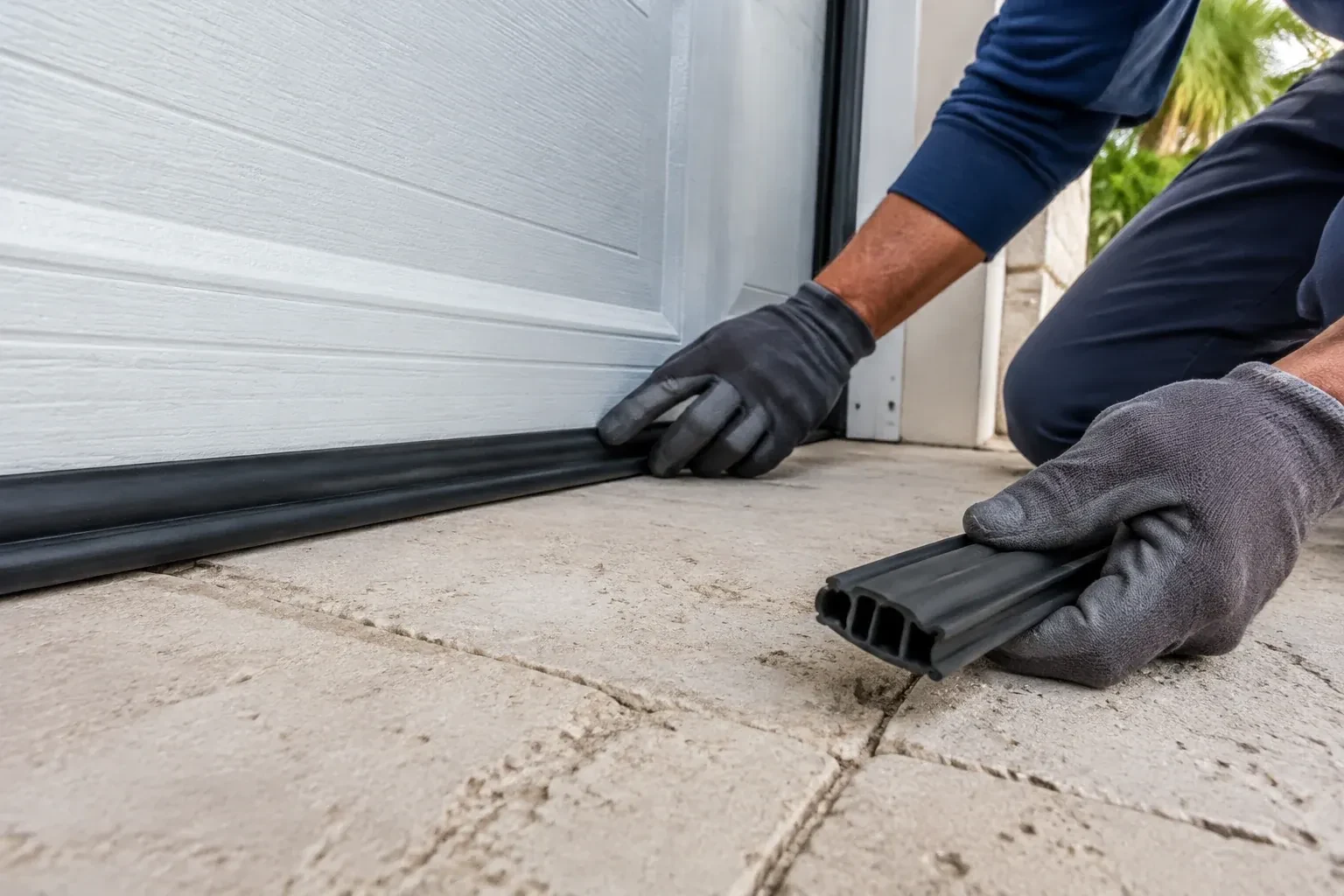
Every mild afternoon the snow melts off the car, runs to the door, and by morning the rubber strip along the bottom is frozen to the concrete. Last week the opener lifted the door and left half the seal on the floor.
Garage Door Bottom Seal Replacement
In plain words
The material matters as much as the shape when the garage sees real winters. Vinyl is the common choice: it resists moisture and sun well but grows stiff in deep cold and stops moulding itself to the concrete. Rubber stays supple at low temperatures and follows an uneven floor, though it can harden after many years of sun. Silicone keeps its flexibility through hot and cold alike and resists cracking, at a higher cost per metre. Choosing the right compound for a door that faces the weather is part of the service, and it is one reason a replacement seal often outlasts the one it replaces.
How the visit goesThe gap under the door is a finger wide at one end and nothing at the other. The door itself looks straight, but the floor drops away toward the corner where the slab has settled, and drafts pour through the wedge.
Shanty Bay
How the visit goes
The bottom section and its rail
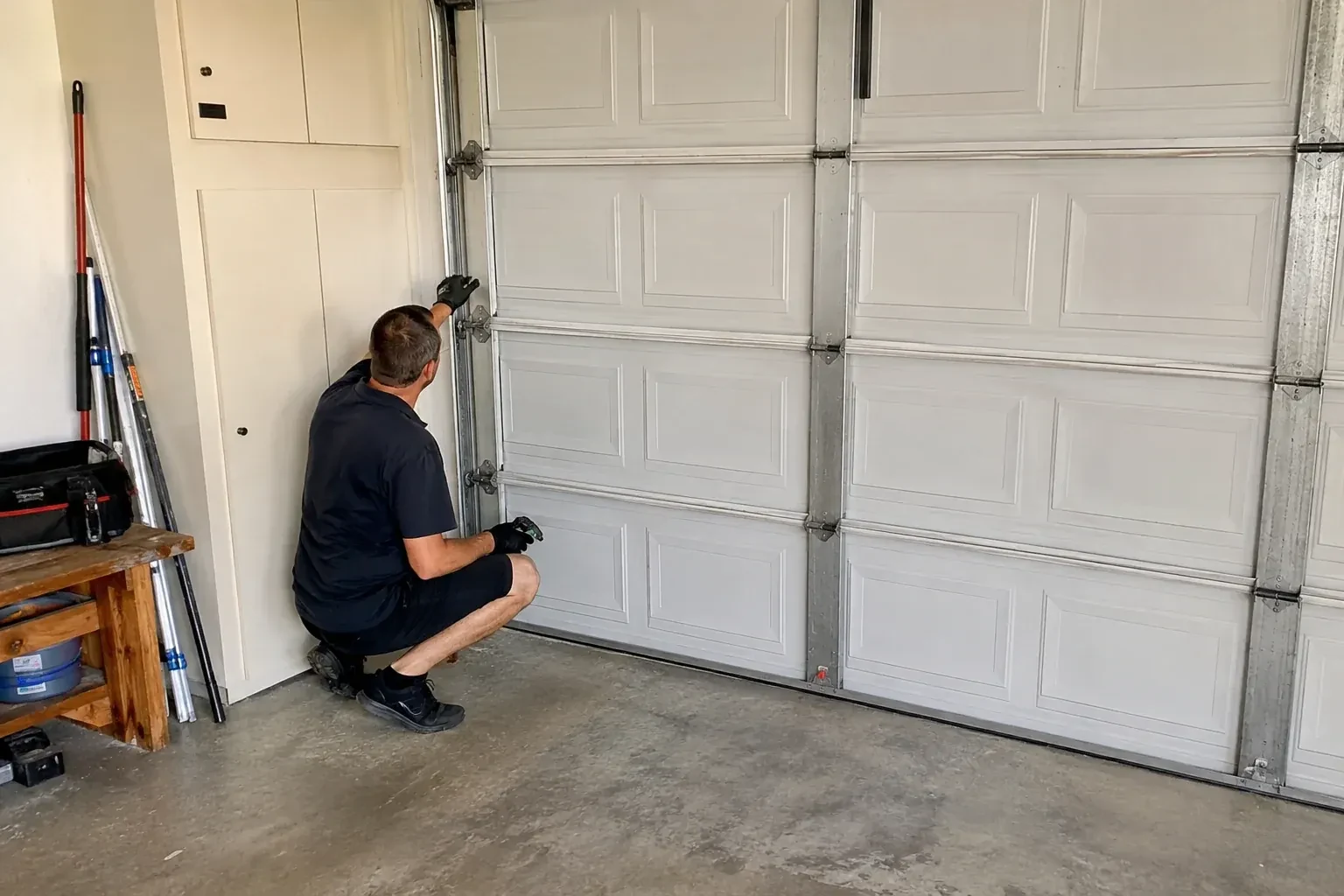
The seal can only be as straight as the edge it hangs from, so the bottom section gets a careful look. On a steel door the technician checks the bottom rail for rust where salt water has sat, dents from a bumper or a shovel, and any bow across the width. On a wood door the rail is checked for rot, cupping and the upturned corners of an old door that has dried unevenly. Fasteners for the retainer and the bottom brackets are checked for corrosion. A sound, straight rail lets a standard seal do its job; a damaged one is pointed out so you can decide on repair, a taller seal, or both.
Closing the door onto the new seal
The clamps come off, the opener is reconnected, and the door is run closed under power while the technician watches the bottom edge meet the floor. The down limit is adjusted so the seal compresses gently along its full length without the section bowing, and the force setting is checked so the door settles onto the new, taller strip without reversing. From inside with the lights off, the floor line is checked again for daylight. The reversing test with a 38 mm (1.5 in) solid object, or a 2x4 laid flat under the door, and the photo-eye test finish the visit, and you are shown the door closing before the ladder is packed.
Fewer visitors of the four-legged kind
A continuous seal removes the easy route mice and insects used along the floor. If rodents were part of the reason for the visit, a few habits finish the job: keep birdseed, pet food and grass seed in lidded bins, move firewood and cardboard away from the walls, and check the jamb seals at floor level, where a gap beside the door is as inviting as one under it. Seals with a stainless mesh embedded in the vinyl are available for garages that have had repeated trouble. A sealed bottom edge plus tidy corners keeps the garage a place where nothing wants to nest.
Garage Door Bottom Seal Replacement
In the van
- T-style bottom seal
- Aluminum bottom seal retainer
- Wire brush and scraper
- Self-drilling retainer screws
- Bead-style bottom seal
What affects the quote
Same fees day, night or weekend
1Season and conditions
A seal frozen to the slab, ice at the threshold or working in deep cold adds time for freeing the old strip, clearing the line and keeping the new roll warm enough to feed.
2Material chosen
Standard vinyl, cold-flexible rubber and silicone are priced differently. Where the door faces the weather, the technician explains what the step up buys in flexibility and working life.
3Threshold seal added
Where a floor threshold is recommended, its length, its type, whether rubber or aluminum-backed, the adhesive and the floor preparation before it is laid appear as a line of their own.
Garage Door Bottom Seal Replacement: questions
Does the opener need adjusting after the seal is changed?
Usually, yes. A new seal is taller than the flattened one it replaces, so the door reaches the floor sooner. Left alone, the opener either presses too hard and bows the bottom section or senses the resistance and reverses. The technician resets the down limit so the seal compresses gently, checks the force, and runs the reversing test with a 38 mm (1.5 in) solid object or a 2x4 laid flat under the door so the safety features still behave as they should.
Will I need a new retainer as well as a seal?
Only if the existing one is damaged, and most are reused. A retainer that is straight, tight to the rail and free of heavy corrosion stays. One that has been kinked by a bumper or shovel, spread open so the seal slips out, or eaten by salt is replaced with a matching aluminum extrusion so the new seal seats properly. The inspection at the start of the visit settles which applies.
What is the difference between T-style, bead and bulb seals?
The names describe the edge that grips the retainer and the shape of the part that meets the floor. A T-style seal has T-shaped edges that slide into slotted channels along the bottom rail. A bead seal has round edges for the rounder channels found on many older steel doors. A bulb, or U-style, seal is a larger tube that compresses further and suits rough or dished floors. The retainer on your door decides which one fits.
Repair & Maintenance
Garage Door Bottom Seal Replacement near you
Most calls from Shanty Bay start with a symptom rather than a part name: a bang, a door stuck halfway, a remote that only works from the driveway. Below are the services behind those symptoms, from spring and cable replacement to opener repair, panel work and complete door installation.